

Bir's current identity is easier to understand as a layering of different experiences than as a single tourism story. Flying at Billing gave the area a clear international profile, but the valley…
How Bir expanded
Paragliding opened the door, while stays, food and local life broadened the visit
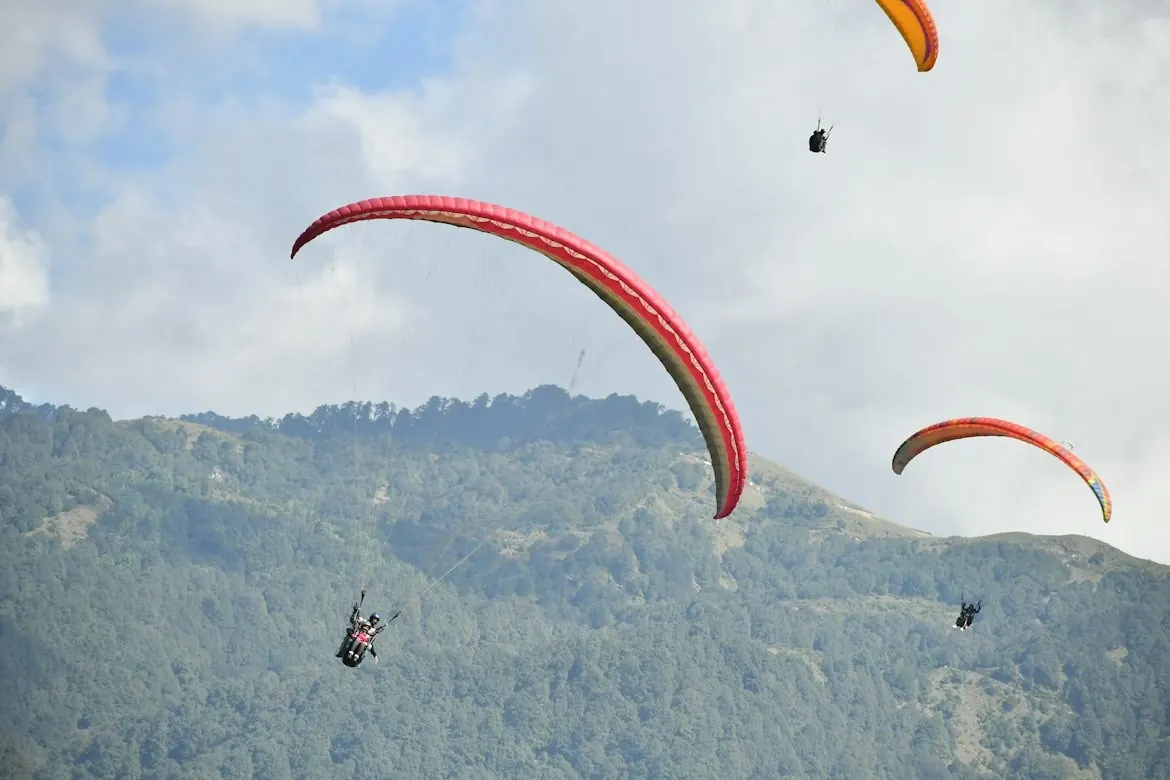
Bir’s current identity is easier to understand as a layering of different experiences than as a single tourism story. Flying at Billing gave the area a clear international profile, but the valley around Bir also contains a Tibetan settlement, Buddhist institutions, village roads, fields, cafés, accommodation and access to the wider Kangra landscape. Official tourism descriptions now present Bir-Billing through adventure, ecotourism, spiritual study and mountain scenery together.
Flying created a strong reason to arrive
The relationship between Billing and Bir is unusually distinctive. Billing is the take-off area and Bir is the landing side, creating a natural movement from the high ridge towards the valley. Himachal Tourism identifies Billing as the take-off point at about 2,290 metres and Bir as the landing area at about 1,400 metres. That geography remains the backbone of the destination.
Staying longer created another kind of trip
A destination centred on one activity needs other experiences when weather changes, companions do not participate or visitors simply want a rest day. Bir already had a cultural and village landscape around the flying activity, and the growth of cafés, hostels, guesthouses and homestays made it easier for visitors to stay long enough to experience those layers.
The Tibetan landscape changed the conversation
The Tibetan Colony and monasteries give Bir a cultural identity that is different from the adventure story. Chokling Monastery and other institutions are part of a living religious and educational landscape. For visitors, that means a day can involve observation, learning and quiet time rather than another adrenaline activity. It also means tourism needs to be respectful: these places are not simply scenic backdrops.
The wider Kangra valley became part of the stay
Bir is connected to a wider regional travel network. Palampur is known for tea-growing landscapes and Dhauladhar views; Andretta adds pottery and arts; Baijnath is a major cultural stop; and Barot offers a different mountain setting in the Uhl valley. Himachal Tourism’s regional material places Bir alongside these destinations rather than treating it as an isolated resort.
The destination is still changing
Accommodation, cafés, transport and visitor habits change faster than a permanent destination description can capture. That is why current business information should always be checked before acting on an old article. The underlying geography is stable; individual opening hours, menus, road conditions and services are not.
Bir’s story is therefore not about replacing paragliding. Flying remains one of the reasons people come. The change is that visitors have more reasons to stay after the flight, return on a non-flying day and experience the valley from ground level. That combination explains why Bir now works as both an adventure destination and a place to spend a slower few days.
The important change is length of stay
The strongest sign of Bir’s broader identity is not that flying became less important. It is that a visitor can now build several different days around the same base. One day can be activity-led, another can be cultural, and another can simply follow the valley and food. That changes Bir from a place you visit for a single experience into a place where the accommodation itself can become a base for exploring.
The geography makes that possible. Bir connects the high Billing landscape with the valley floor, while roads lead outward towards Palampur, Baijnath and other parts of Kangra. The result is a destination with a strong central story and enough surrounding context to reward visitors who stay longer.
Sources: District Kangra · Himachal Tourism
Keep exploring the valley.
Use the practical Bir Billing information on the site to turn what you have read into a day in the valley.
Open Bir Billing Information →